Introduction
Every year, human activity pumps over 37 billion metric tons of carbon dioxide into the atmosphere — a figure that has grown relentlessly since the Industrial Revolution. Carbon emissions are not merely an environmental footnote; they are the central driver of a global crisis threatening food systems, coastlines, biodiversity, and public health.
What are carbon emissions?
Carbon emissions refer primarily to CO₂ and methane (CH₄) released through the burning of fossil fuels (coal, oil, and natural gas), deforestation, cement production, and agriculture. These gases trap heat in the lower atmosphere through the greenhouse effect, causing average global temperatures to rise — a phenomenon known as global warming.
How emissions warm the planet
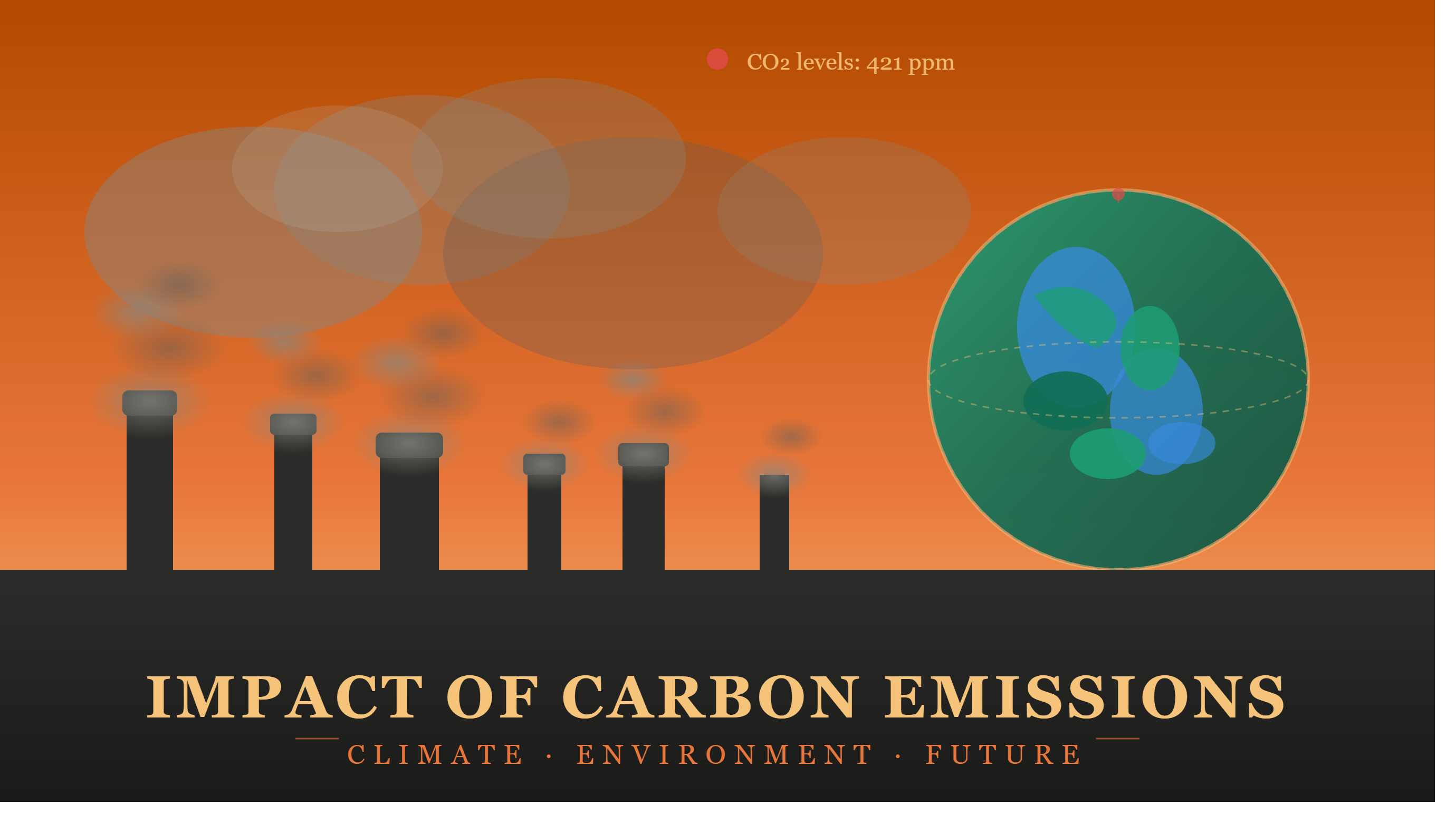
Solar radiation passes through the atmosphere and heats the Earth's surface. Normally, some of this heat radiates back into space as infrared energy. Greenhouse gases, however, absorb and re-emit that infrared radiation, warming the lower atmosphere. Since pre-industrial times, CO₂ concentrations have risen from roughly 280 ppm to over 421 ppm in 2024 — the highest level in at least 800,000 years.
Cascading consequences
The downstream effects of elevated carbon concentrations are far-reaching. Rising sea levels — driven by thermal expansion and ice melt — threaten coastal cities from Miami to Mumbai. Extreme weather events such as floods, droughts, and Category 5 hurricanes are becoming more frequent and more intense. Ocean acidification, caused by CO₂ dissolving into seawater, is bleaching coral reefs and disrupting marine food chains. And ecosystem displacement is pushing thousands of species toward extinction as habitats shift faster than species can adapt.
Human health and economic cost
Air pollution from fossil fuel combustion contributes to roughly 7 million premature deaths annually, according to the World Health Organization. Crop failures driven by climate shifts endanger food security for billions. The World Bank estimates unchecked climate change could push an additional 100 million people into poverty by 2030. Conversely, the economic opportunity in the clean-energy transition is estimated at over $10 trillion by 2030.
The path forward
Achieving the Paris Agreement's goal of limiting warming to 1.5 °C requires global emissions to reach net zero by 2050. This demands a rapid transition to renewable energy, electrification of transport, sustainable land use, and carbon capture technologies. Governments, corporations, and individuals all have critical roles to play — through policy, investment, and daily choices that reduce our collective carbon footprint.
Conclusion
Carbon emissions are the defining challenge of our era, but they are not an insurmountable one. The science is clear, the technologies are available, and the economic case is compelling. What remains is the collective will to act — swiftly and at scale — before the window for meaningful intervention closes.